Variety Catalog – Krasa
Characteristics and Description of the Variety

BASE DATA
| Variety Name: | Krasa |
| Earliness: ⚠ | very early |
| Usage Type: | edible |
ORIGIN
| Origin: | KE 66/7 x Anosta |
| Country of Origin: | Czech Republic |
| Year of Registration in Poland: | 2003 |
| Year Removed from the Register: | |
| Breeder: | Sativa Kerkov a.s. |
| Agent Maintaining the Variety in Poland: | Europlant Handel Ziemniakami sp. z o.o. |
COMPOSITION (CONTENT)
| Starch Content [%]: | 12.0 |
| Dry Matter Content [%]: | 18.9 |
| Vitamin C Content [mg%]: | 14.7 |
| Glycoalkaloid Content [mg/kg dry matter]: | 42.0 |
| Solanine Content in Tubers [%]: | 6.0 |
STORAGE
| Storage Durability: ⚠ | 3 |
| Recommended Storage Temperature for Seed Potatoes [°C]: | 2 – 4 |
| Recommended Storage Temperature for Edible/Processing Potatoes [°C]: | 4 |
| Rest Period of Tubers: ⚠ | 1 |
TUBERS
| Tuber Shape: ⚠ | roundish |
| Shape Regularity: ⚠ | 7.4 |
| Eye Depth: ⚠ | 9.0 |
| Tuber Size: ⚠ | 7.1 |
| Skin Color: | yellow |
| Skin Smoothness: | smooth |
| Flesh Color: | yellow |
| Light Sprout Color: | reddish-purple |
FLOWERS
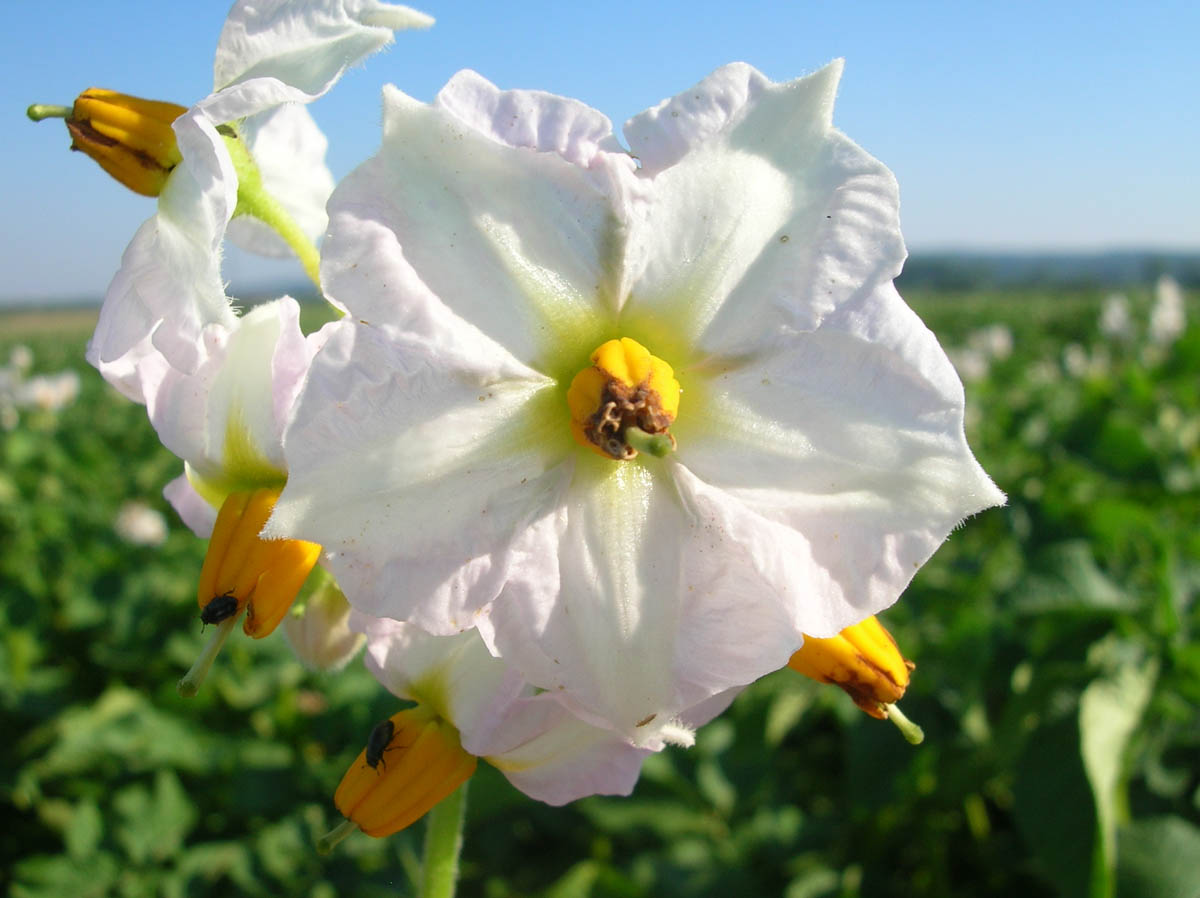
| Flower Color: | reddish-purple with white tips |
| Flower Abundance: ⚠ | 3 |
| Anther Color: | orange |
| Style Length: | medium – long |
PLANT
| Plant Height: | medium |
| Stem Thickness: ⚠ | |
| Plant Growth Type: | intermediate |
TASTE
|
Culinary type: ⚠ |
B |
| Taste: | good |
|
Taste [1-9]: ⚠ |
6.8 |
FLESH DARKENING
| Raw after 4 hours: ⚠ | 8.2 |
| Cooked after 10 min.: ⚠ | 9.0 |
| Cooked after 24 hours: ⚠ | 8.7 |
SUITABILITY FOR
| Fries: | |
| Suitability for fries – index: | |
| Chips: | |
| Suitability for chips – index: | |
| Dried products: | |
| Canned and frozen products: | Yes |
| Salads: | Yes |
| Puree, dumplings, pancakes, noodles: |
TENDENCIES TO
| Dark bruising susceptibility: ⚠ | 6 |
|
Tuber deformation: ⚠ |
2.0 |
|
Tuber cracking: ⚠ |
4 |
|
Flesh rust spots: ⚠ |
3.0 |
|
Blackleg: ⚠ |
4.0 |
DISEASES
| Susceptibility to late blight (Phytophthora infestans):⚠ | 60% |
| Susceptibility to early blight (Alternaria solani):⚠ | 50% |
| Susceptibility to bacterial wilt (Ralstonia solanacearum):⚠ | 50% |
| Susceptibility to common scab (Streptomyces scabies):⚠ | 50% |
| Susceptibility to root rot (Fusarium spp.):⚠ | 50% |
FROST TOLERANCE
| Susceptibility to frost damage:⚠ | 7.0 |
| Optimal planting date: | 20 April – 10 May |
| Optimal harvest date: | 10 August – 10 September |
PLANTING DISTANCE
| In rows: | 70 – 80 cm |
| Between tubers: | 30 – 35 cm |
SOIL
| Soil type: | light soil, sandy, or loamy |
| Recommended pH: | 5.5 – 6.5 |
| Potato plants after: | corn, peas, carrots |
| Potato plants before: | sugar beets, tomatoes, and other nightshades |
CULTIVATION AND YIELD
|
Crop yield: ⚠ |
5 |
| Net profit: | good |
| Marketing conditions: | good |
|
Storage potential: ⚠ |
5.5 |
VARIETY
| Breeder: | H. Leenstra |
| Year of registration: | 1992 |
| Type: | dinner, chips |
| Skin color: | yellow |
| Flesh color: | yellow |
| Shape: | oval |
| Cooking type: | waxy |
| Market class: | table |
| Resistance to nematodes: | 4.0 |
| Resistance to tuber moth: | 5.0 |
AGRONOMIC DATA
| Recommended spacing: | 70 – 80 cm between rows, 30 – 35 cm between tubers |
| Crop rotation: | avoid planting after other nightshades like tomatoes or sugar beets |
| Soil requirements: | light soil, sandy or loamy, pH 5.5 – 6.5 |
| Recommended planting date: | 20 April – 10 May |
| Recommended harvest date: | 10 August – 10 September |
WIREWORM
| Resistance to pathotypes: | Ro1 |
POTATO CANCER
| Resistance to pathotypes: | D1 |
VIRUSES
| Virus Y – PVY: ⚠ | 4 |
| Reaction on tubers after PVYNTN infection: | |
| Leafroll virus – PLRV: ⚠ | 6 |
| Virus M – PVM: | moderately resistant |
| Virus M – PVM [1-9]: ⚠ | 5.0 |
| Virus X – PVX: ⚠ |
POTATO BLIGHT
| Leaf resistance to potato blight: ⚠ | 3.5 |
| Tuber resistance to potato blight: ⚠ | 4.0 |
ROT
| Tuber resistance to dry rot: ⚠ | |
| Tuber resistance to wet rot: ⚠ |
OTHER DISEASES
| Tuber resistance to mechanical damage: ⚠ | 6 |
| Plant resistance to blackleg: ⚠ | 4.0 |
| Tuber resistance to common scab: ⚠ | 6.0 |
| Tendency of tubers to be infected with silver scurf: ⚠ | 5.0 |
| Tendency of tubers to crack: |
GENERAL YIELD
| After 60 days from planting [dt/ha]: | 204 |
| After 75 days from planting [dt/ha]: | 241 |
| At the end of the vegetation period [dt/ha]: | 464 |
MARKETABLE YIELD
| After 60 days from planting [dt/ha]: | 194 |
| After 75 days from planting [dt/ha]: | 273 |
| At the end of the vegetation period [dt/ha]: | 442 |
SHARE OF MARKETABLE YIELD IN GENERAL YIELD
| After 60 days from planting [%]: | 96 |
| After 75 days from planting [%]: | 91 |
| At the end of the vegetation period [%]: | 96 |
FERTILIZATION
| Recommended nitrogen dose for early harvest [kg N/ha]: | 60 |
| Recommended nitrogen dose for harvest at the end of the vegetation period [kg N/ha]: | 140 |
REQUIREMENTS
| Soil: | medium |
| Water: | medium-large |
ADDITIONAL INFORMATION
| Degree of difficulty in seed production: | difficult |
| Number of tubers per plant [pcs]: | |
| Number of stems [pcs/tuber 20g]: |
GENERAL NOTES
The variety with the hypersensitivity gene Nx, providing complete field resistance of plants to PVX, is represented by the breeder in Poland – Europlant.
Gallery
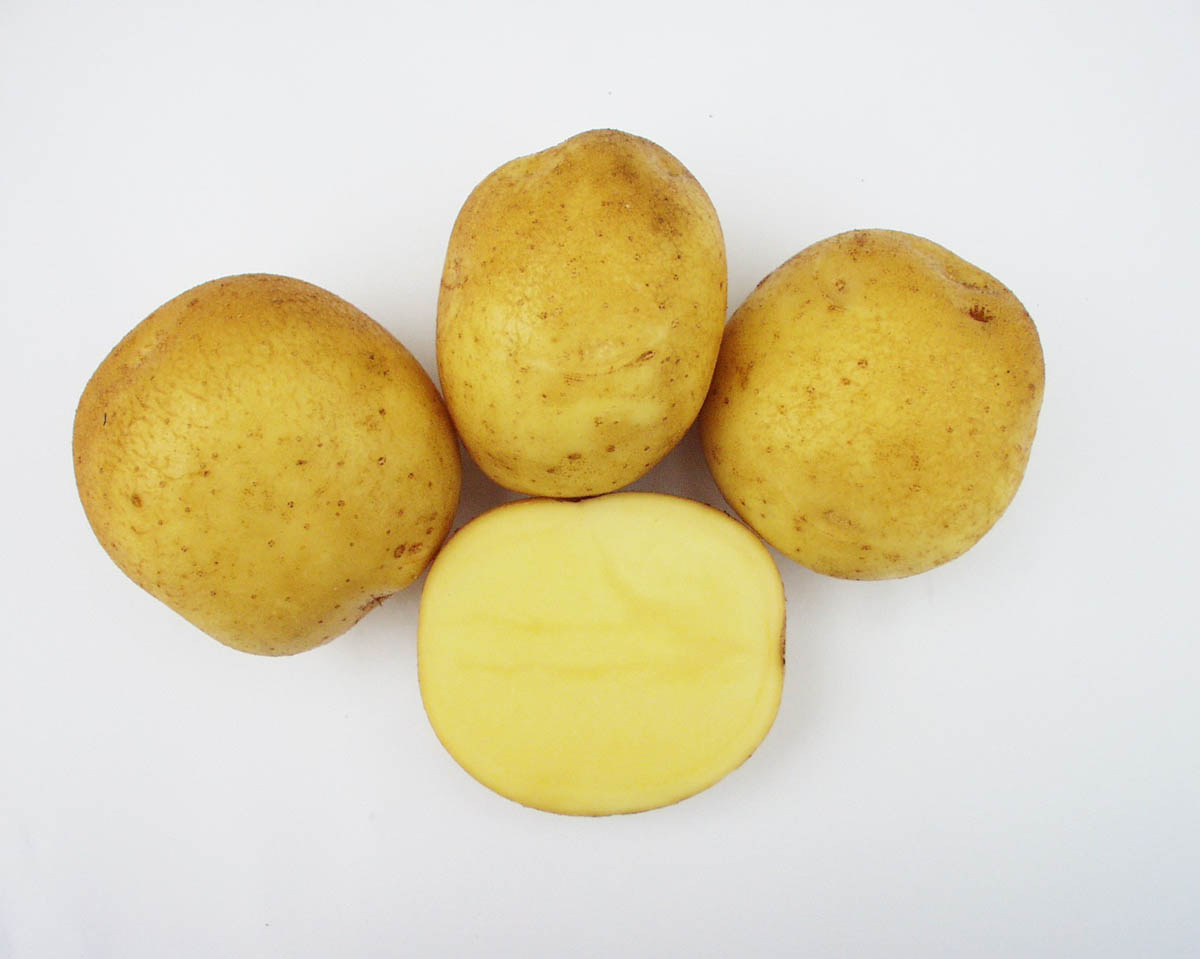
Variety Krasa – tubers
(photo: S. Wróbel)
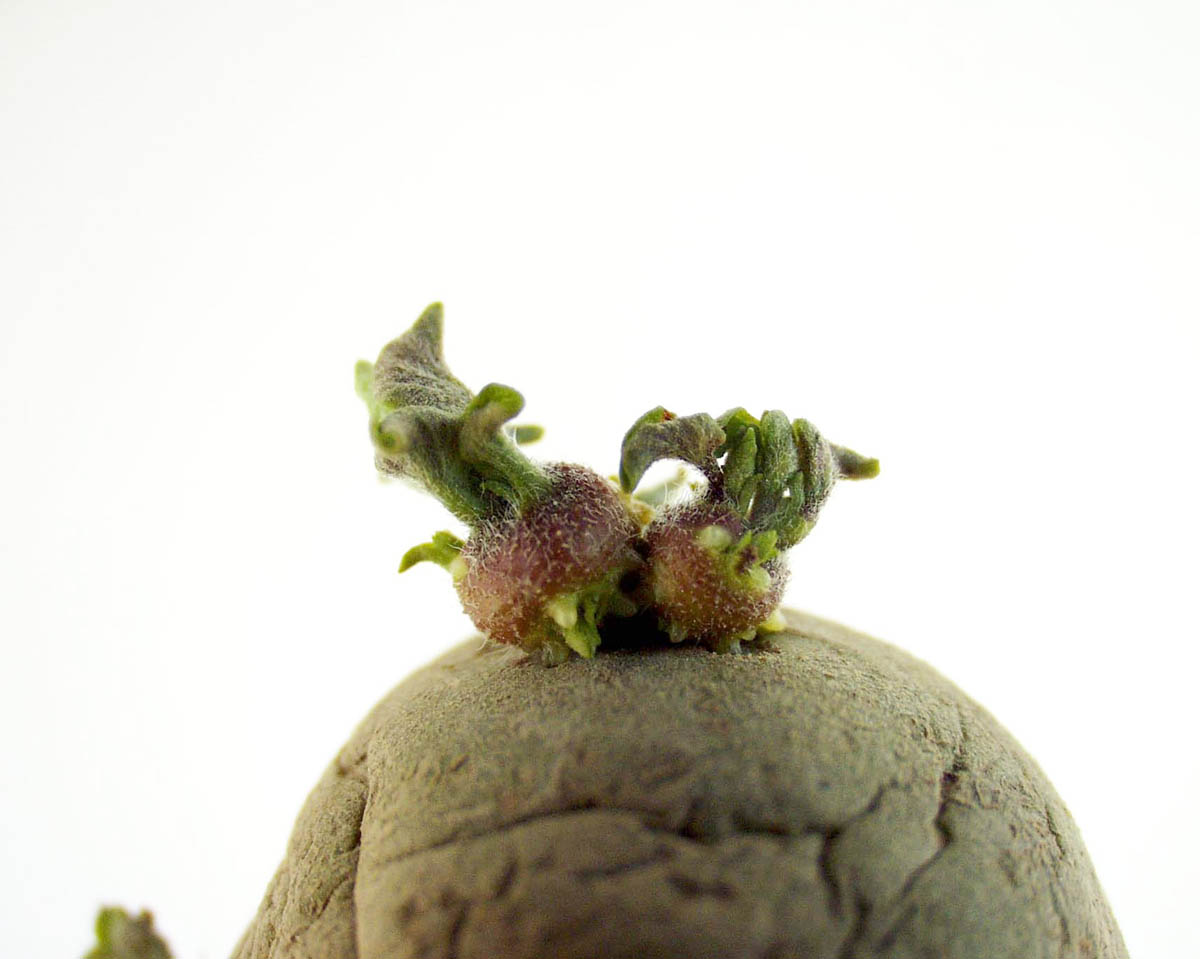
Variety Krasa – sprouts
(photo: S. Wróbel)